Do Athletes Need High Muscle Glycogen for Peak Endurance?

Do Athletes Need High Muscle Glycogen for Peak Endurance?


Do Athletes Need High Muscle Glycogen for Peak Endurance?

For many years, high-carbohydrate diets have been widely regarded as the standard approach for fueling endurance exercise because they help maximize muscle glycogen storage.

In recent years, however, the growing popularity of low-carbohydrate, high-fat diets has sparked debate about whether endurance athletes actually require large amounts of carbohydrates to perform at their best. Supporters of low-carb approaches suggest that becoming fat-adapted may improve endurance by increasing the body’s ability to burn fat for energy. On the other hand, critics argue that lower glycogen levels can reduce performance, especially during long periods of high-intensity activity.

This discussion also raises questions about carbohydrate intake during exercise. Some researchers believe that even small amounts of carbohydrates may help improve performance, while others suggest that higher carbohydrate intake is necessary to maintain energy supply and delay fatigue during prolonged endurance efforts.

A little over a year ago, I wrote about a study that challenged traditional notions about the role of carbohydrates for endurance athletes — the findings suggested that a ketogenic diet was compatible with high-intensity exercise performance and may come with additional metabolic benefits.

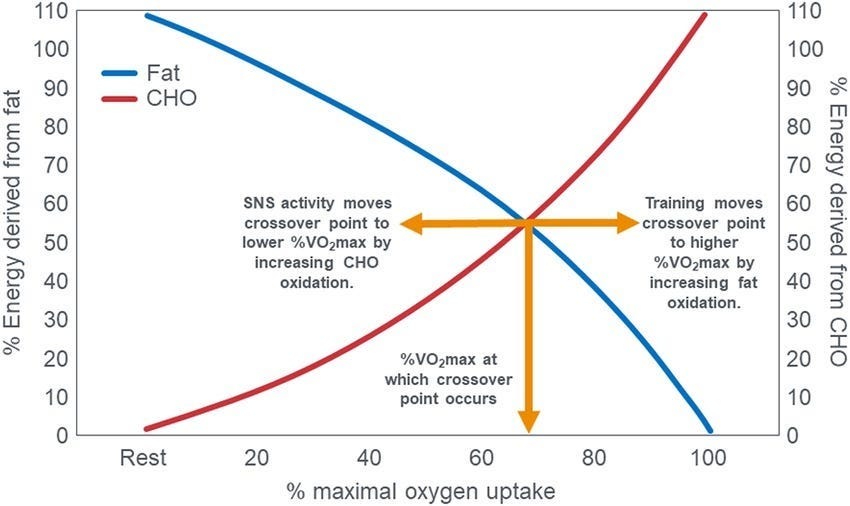
One of the more interesting findings of that study (in my opinion) was the shift in the so-called “crossover point” — the exercise intensity at which the body’s energy needs are supplied by a greater proportion of glucose than fat/lipids. Traditionally, the crossover point occurs at an exercise intensity between 60% and 70% of one’s maximal oxygen uptake, with maximal fat oxidation happening somewhere in this range. In participants adapted to a low-carbohydrate diet, the crossover point occurred much later, and maximal fat oxidation occurred at an exercise intensity above 85% of max.

What does this all mean?

Adapting to a low-carbohydrate diet shifts the way the body uses carbohydrates and fat during exercise. The observation that this occurs in the context of a maintenance of high-intensity exercise performance questions the obligatory role of high dietary carbohydrate availability for athletes, or at least the obligatory role of muscle glycogen for sustained performance.

Beginning exercise with a lower muscle and liver glycogen content — something characteristic of a low-carbohydrate or ketogenic diet — would necessarily reduce prolonged endurance exercise performance. That is, if muscle glycogen truly is obligatory. Not everyone believes this to be true.

Based on the results of a new study, muscle glycogen may not be the obligatory fuel source during endurance exercise as was once thought. Rather, it might all come down to sufficient levels of blood glucose. 

https://www.frontiersin.org/journals/physiology/articles/10.3389/fphys.2023.1150265/full

Now, the same research group published another study that challenges dietary dogma (again). It addressed several key questions at the heart of endurance fueling strategies: Is glycogen depletion as critical to fatigue as traditionally believed? Can athletes perform equally well on low-carb and high-carb diets with adequate adaptation? And how effective is minimal carbohydrate supplementation during prolonged exercise?

The study set out with three primary aims:

  1. To evaluate whether endurance performance (time-to-exhaustion at 70% VO2 max) differs between athletes adapted to low-carb and high-carb diets over six weeks.
  2. To determine the impact of carbohydrate supplementation during exercise on endurance performance across both dietary patterns. This included investigating whether minimal carbohydrate intake (10 grams per hour) during exercise could enhance performance and mitigate exercise-induced hypoglycemia, regardless of the athlete’s habitual diet.
  3. To investigate the time course of metabolic and performance adaptations to low-carb and high-carb diets, with a focus on their influence on endurance performance.

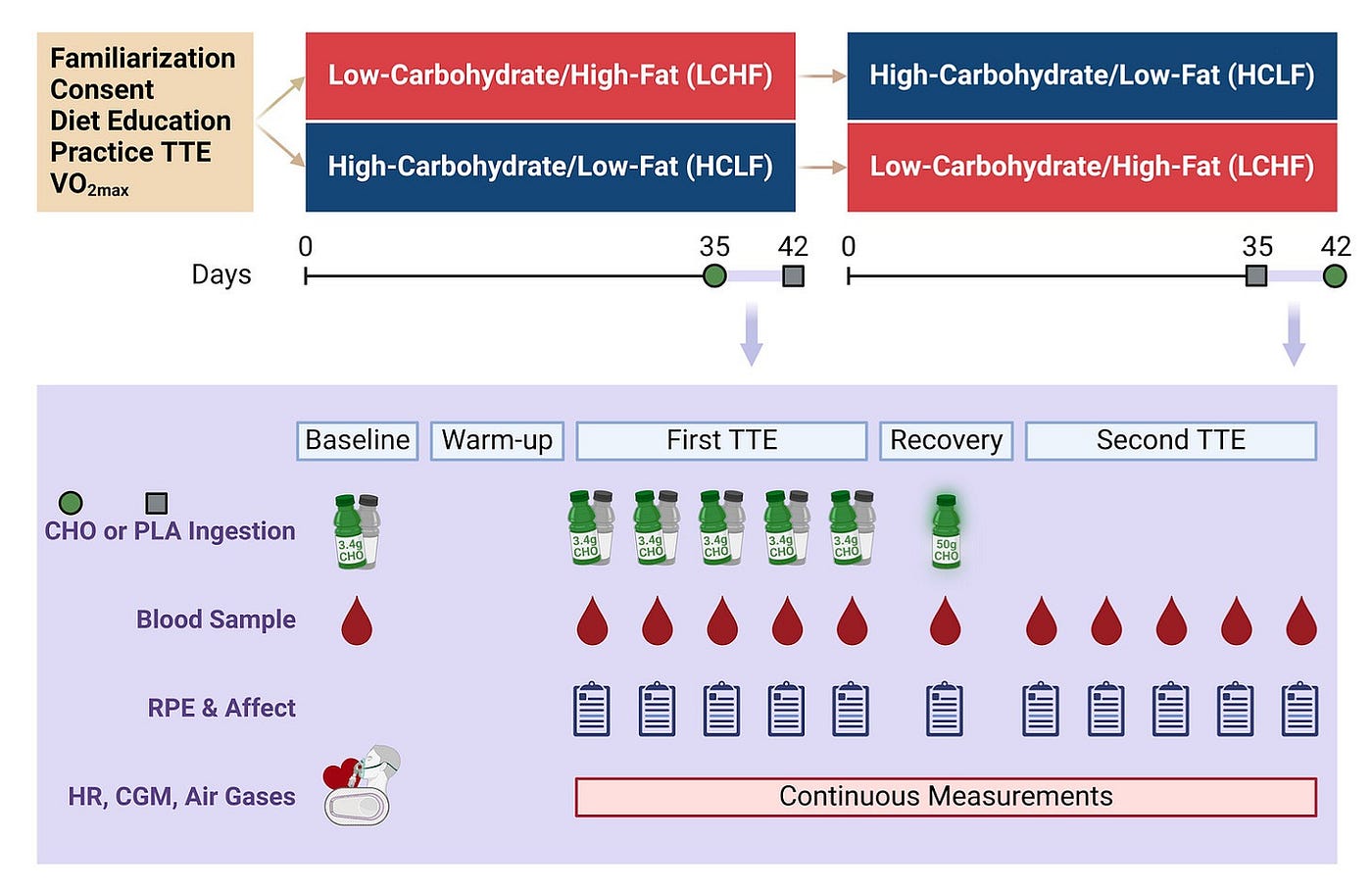
The study included a group of healthy, trained endurance athletes with experience in long-duration exercise (triathlon). They were randomly assigned to either a low-carbohydrate (LC) or high-carbohydrate (HC) diet for 6 weeks each before crossing over to the other diet after a 2-week washout period. Both diets were isocaloric, ensuring equal caloric intake across groups despite differences in macronutrient composition. Notably, the low-carb diet comprised less than 50 grams of carbohydrates per day, 70–80% fat, and 20–25% protein, while the high-carbohydrate diet comprised ~380 grams of carbohydrates per day (60–65% of total calories), 70–80% fat, and 20–25% protein.

Endurance performance was tested through two time-to-exhaustion trials performed at 70% VO2 max, a moderate but strenuous intensity designed to replicate prolonged, glycogen-depleting exercise. These tests were conducted after participants had undergone a six-week adaptation to their assigned diets. To investigate the effects of carbohydrate supplementation during exercise, participants completed the time-to-exhaustion trials under four distinct conditions:

  • Low-carb diet with placebo
  • Low-carb diet with carbohydrate supplementation
  • High-carb diet with placebo
  • High-carb diet with carbohydrate supplementation

Carbohydrate supplementation consisted of ingesting 10 grams of maltodextrin (a simple carbohydrate) per hour during exercise, provided in 3.5-gram doses delivered in a standardized solution every 20 minutes. In the placebo conditions, participants consumed a similar solution that contained no carbohydrates.

After each 6-week diet condition, the participants performed the time-to-exhaustion tests twice, one week apart: one with carbohydrates and one without. During each of these testing sessions, two time-to-exhaustion tests were completed (TTE1 and TTE2, respectively), the second test occurring ~20 minutes after the first and involving the consumption of 50 grams of carbohydrate (in the carbohydrate supplementation condition) or the placebo beverage.

Let’s take a moment to appreciate the methodology here. Ten grams of carbohydrates per hour is 6–12 times lower than the current recommendations of 60–120 grams per hour and is just enough carbohydrate to maintain blood glucose levels. But as it turns out, that was the point. By using such a small amount of carbohydrate during exercise, the researchers tested the hypothesis that, rather than muscle glycogen being the determining factor for fatigue during prolonged exercise, it’s the maintenance of blood glucose/prevention of exercise-induced hypoglycemia that really matters.

Before discussing the performance results, let’s look at some of the dietary differences that were observed (by design) during the study. While energy intake and training load remained consistent across both diet conditions, ensuring any observed effects were diet-specific, significant macronutrient differences emerged:

  • During the low-carb diet, participants consumed substantially fewer carbohydrates (-340 grams daily), sugar (-89 grams), and fiber (-19 grams) while increasing protein (+57 grams) and fat (+115 grams) intake compared to the high-carb diet.
  • Adherence to the low-carb diet was validated by self-reported intake and a measurable rise in blood ketones. After just one week, circulating levels of R-βHB, the primary ketone, entered the nutritional ketosis range (0.5 ± 0.3 mM) and remained elevated throughout the 42-day intervention (Day 42: 0.6 ± 0.5 mM).

Performance is similar for low-carb and high-carb diets

Time-to-exhaustion results showed no differences in prolonged endurance performance between the low-carb diet and the high-carb diet during the placebo condition (when no carbohydrates were consumed): the participants cycled for ~84 minutes and ~88 minutes after the low-carb and high-carb diets, respectively (we can debate the real-world versus the statistical significance of a 4-minute difference another time).

However, when participants consumed a small carbohydrate solution (10 grams of maltodextrin per hour) during exercise, both diet groups (low-carb and high-carb) experienced a notable performance boost, extending time-to-exhaustion by an average of 19 minutes or 22%!
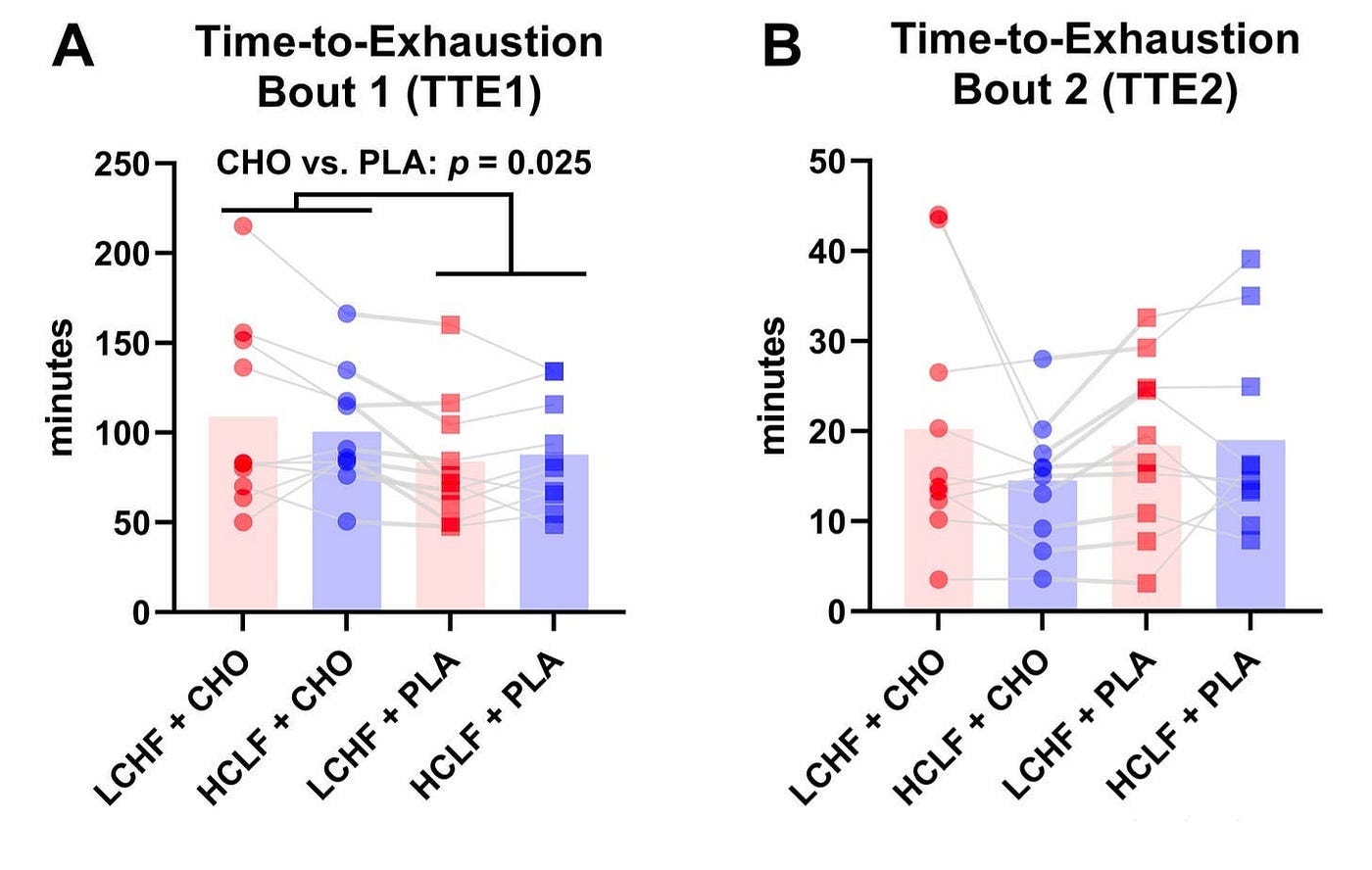

After the low-carb diet, the participants cycled for 109 minutes with carbohydrates compared to 84 minutes without — a difference of 25 minutes that met the threshold of statistical significance. In other words, carbohydrate supplementation benefits athletes who have adapted to a low-carbohydrate diet. After the high-carb diet, the participants cycled for 100 minutes with carbohydrates compared to 88 minutes without — a difference of 12 minutes that, while not reaching statistical significance, is still a relevant performance increase. Again, there was no statistically significant difference in performance between low- and high-carb conditions when carbs were supplemented (even though time-to-exhaustion was ~9 minutes longer in the low-carb condition).

Endurance performance during subsequent exercise tests (TTE2) remained consistent across both diet conditions — time-to-exhaustion was not different between the low-carb diet and the high-carb diet, independent of whether or not the participants supplemented with carbohydrates.

Differences in fat and carbohydrate oxidation emerge post-diet

Despite performance being similar between the diets, fuel utilization during exercise was dramatically different depending on the dietary composition and whether or not carbohydrates were used during exercise.

Carbohydrate oxidation was higher in the high-carb conditions (high-carb with carbohydrate supplementation and high-carb with placebo) compared to low-carb without supplementation (low-carb with placebo), with increases of 32–34% during the first time-to-exhaustion test and 41% during the second test. However, acute carbohydrate ingestion in the low-carb condition shifted substrate utilization toward carbohydrate oxidation, matching levels seen in the high-carb conditions. In contrast, fat oxidation was consistently higher in the low-carb condition without supplementation. During both time-to-exhaustion tests, low-carb with placebo resulted in 32–47% greater fat oxidation than the high-carb conditions.
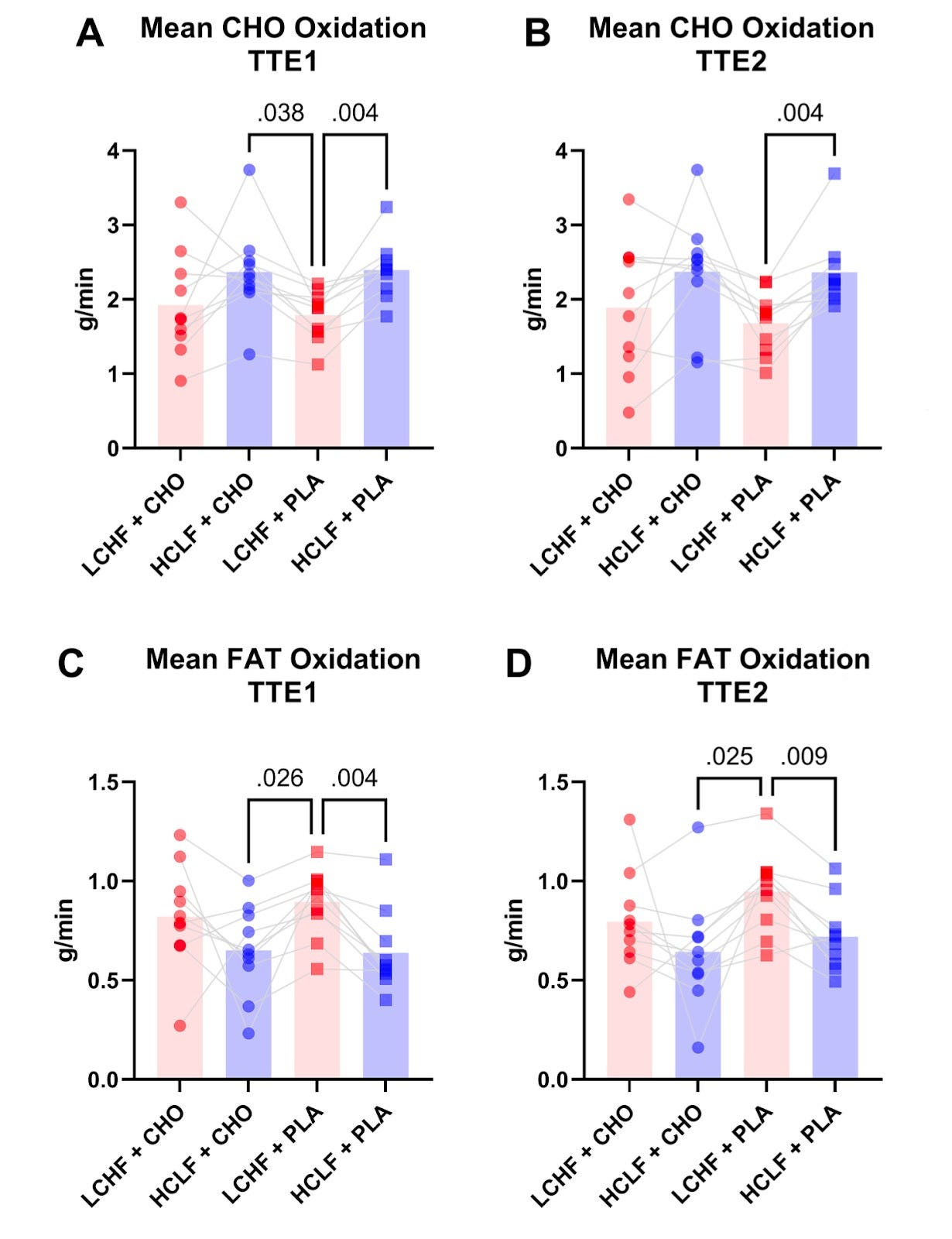

When paired with the results of the 2023 study discussed at the beginning of this post, these findings challenge the long-held notion that high-carbohydrate diets are inherently superior for endurance performance due to their role in maximizing muscle glycogen stores (which were not measured in this study but were assumed to be lower…something I take minor issue with).

Unlike previous studies with shorter interventions (typically less than four weeks), which often concluded that low-carb diets impair performance, the current study’s longer adaptation period likely allowed for more complete metabolic adjustments, like increased fat oxidation efficiency to offset reduced glycogen availability.

Another noteworthy observation was the potential role of ketones in mitigating the effects of reduced carbohydrate availability during low-carb conditions. Participants in the low-carb group had substantially elevated blood ketone levels during exercise, which appeared to act as a metabolic buffer, preventing severe hypoglycemia and enabling sustained exercise performance.

Traditionally, muscle glycogen has been considered the central determinant of prolonged exercise performance. However, glycogen stores, while important, may not be the sole driver of endurance capacity. Indeed, even small amounts of carbohydrates during exercise — as little as 3.5 grams every 20 minutes or ~10 grams per hour — significantly enhance endurance performance simply by mitigating exercise-induced hypoglycemia. This effect was observed regardless of pre-exercise glycogen levels or dietary background, highlighting the role of intra-exercise carbohydrate supplementation well below the current recommendations of 90–120 grams per hour for elite endurance athletes.

Does this mean we need to rethink our carbohydrate guidelines?
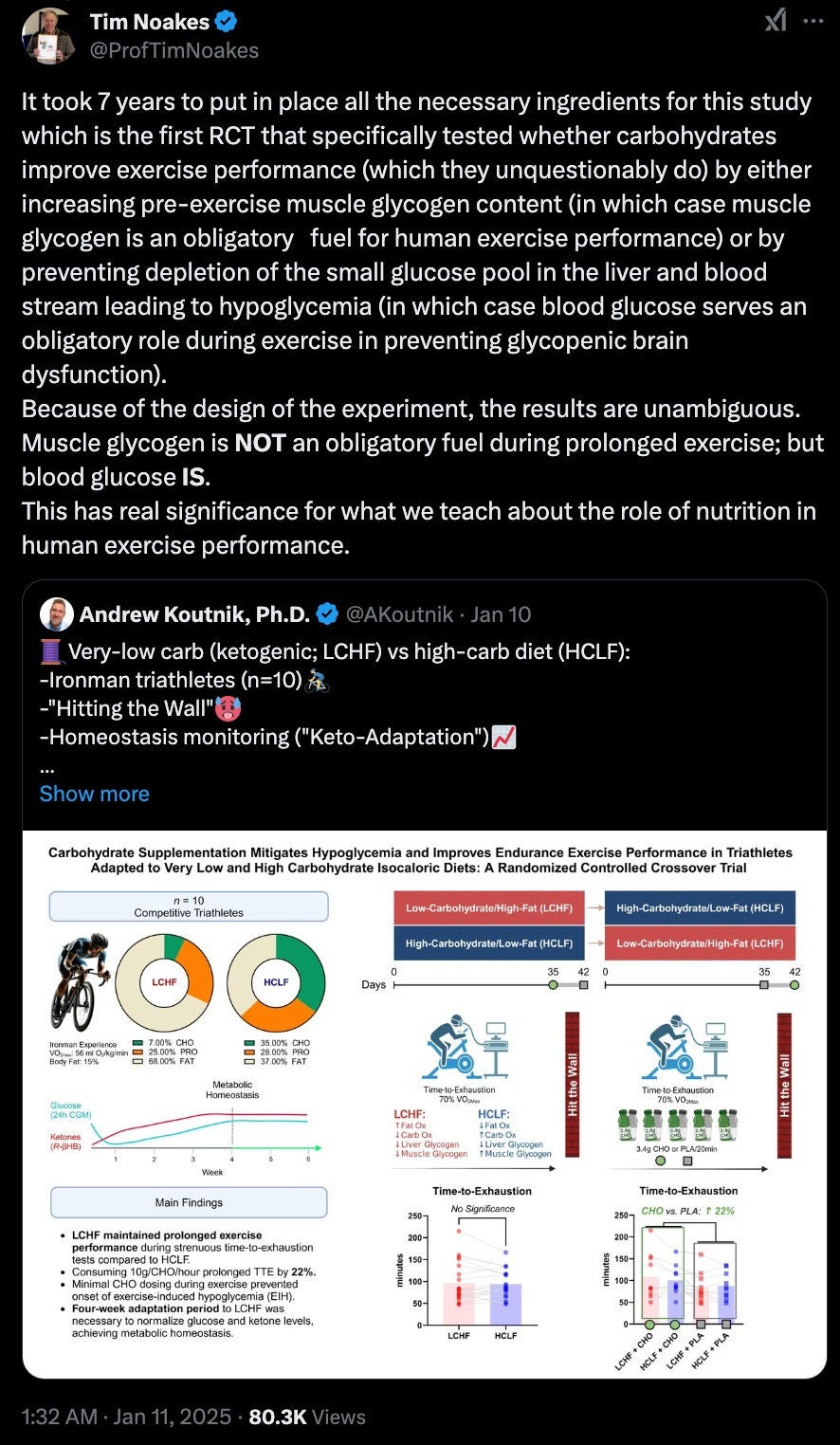

If as little as 10 grams per hour is sufficient to produce a significant performance benefit, this raises important questions about whether higher rates of carbohydrate ingestion (i.e., 90–120 grams per hour) provide meaningful advantages, particularly given the potential for gastrointestinal discomfort during exercise.

Of course, this study did not investigate whether higher doses of carbohydrate provided an extra advantage — that will have to wait until another time. Ten grams per hour can hardly be seen as the level where optimal performance occurs; however, it does hint that strategic, rather than maximal, carbohydrate supplementation may be a more practical and effective approach for many athletes.

This study won’t be the nail in the coffin for high-carbohydrate fueling — many athletes (including myself) are starting to embrace the power of carbs for performance and experimenting with newer and bolder fueling strategies. There are many questions left unanswered and more studies to be done before we can unambiguously say that endurance performance just comes down to “preventing low blood sugar.” I have a feeling it’s way more nuanced than that.

Why Dwayne Johnson’s Weight Loss May Go Beyond a Film Role

Why Dwayne Johnson’s Weight Loss May Go Beyond a Film Role


Why Dwayne Johnson’s Weight Loss May Go Beyond a Film Role

Unless your Wi-Fi stopped working, you’ve probably seen the photos.

For years, Dwayne “The Rock” Johnson has been famous for his massive action-hero build. Recently, however, the actor appears noticeably slimmer, leading many fans online to say he now looks more like “The Pebble.”

Johnson addressed the speculation during an appearance at a film festival, explaining that his leaner look is related to preparation for an upcoming movie role.

At first glance, that explanation seems reasonable. After all, he’s an actor, and physical transformations are often part of the job.

But some fitness experts believe there may be more to the story. From a bodybuilding perspective, dramatic body changes at that level often involve many factors—strict training programs, precise nutrition strategies, and carefully managed conditioning phases.

While the movie role may indeed be a major reason for the transformation, it also highlights a broader reality of the entertainment industry: maintaining or changing a physique for the camera can require intense dedication and highly specialized fitness approaches.

For fans and fitness enthusiasts alike, The Rock’s latest transformation is another reminder that the bodies we see in Hollywood often reflect months of disciplined work behind the scenes.


The Rock And His “Natty” Status

In a 2009 interview, The Rock admitted to trying anabolic steroids when he was 18 or 19. But ever since then, he has maintained that his physique is “all natural.”

Nothing more than hard work and clean eating. Right.

As someone who’s made a living in the fitness industry, I’ll say this plainly. I’m 99.99% certain that The Rock has been a long-time user of performance-enhancing drugs (PEDs).

Not just a few experimental cycles when he was a teenager. I’m talking about years of nearly continuous steroid use to maintain superhuman levels of muscle mass and definition.

I base this subjectively on nearly two decades of being around professional bodybuilders on gear. But also, The Rock has a fat-free mass (FFMI) score of 27.1, which is well above the proposed natural limit of 25. Highly indicative of steroid use.

That’s not meant as a personal attack. It’s simply facing reality. At over 50 years old, maintaining the level of muscle mass and conditioning The Rock has displayed is virtually impossible without pharmacological support.

Even men with elite genetics, the best nutrition, and perfect training don’t hold that much size and density naturally past their 40s, let alone well into their 50s.

He’s either on steroids, or he has some one-in-a-billion genetic mutation and should donate his body to science for the good of all mankind.


Photo by Hennie Stander on Unsplash

So why hasn’t he admitted it? For the same reasons no athlete or actor in the public eye ever does.

  • In the US, anabolic steroids are classified as controlled substances, so admitting use carries legal risks.
  • On top of that, there’s the stigma. PED use is viewed by many as “cheating”. An athlete’s, and even an actor’s, accomplishments are diminished if they admit to steroid use.
  • From a personal branding standpoint, it’s better (and more profitable) to push the idea that success comes from diet and discipline alone.

And that brings us back to The Rock’s recent transformation. He says the extreme weight loss is simply for an upcoming film role. That is partially true. But that explanation doesn’t look at the bigger picture.


Why The Rock Is Slimming Down Now

In my opinion, The Rock’s dramatic size reduction looks less like a temporary diet and more like a strategic personal shift.

What we’re really seeing is a deliberate transition from decades of heavy PED use toward a more sustainable, age-appropriate approach. One that prioritizes health, longevity, and career versatility.


Health comes first.

Steroids and other PEDs come with serious side effects, including a marked increase in cardiovascular issues. That's why heart complications tragically cut short the lives of so many pro wrestlers and bodybuilders.

At 53 years old, Johnson has likely reached the point where continuing to run high doses would present significantly more risk than reward. Transitioning down to testosterone replacement therapy (TRT) would allow him to maintain optimal physiological hormone levels without the same strain on his heart.


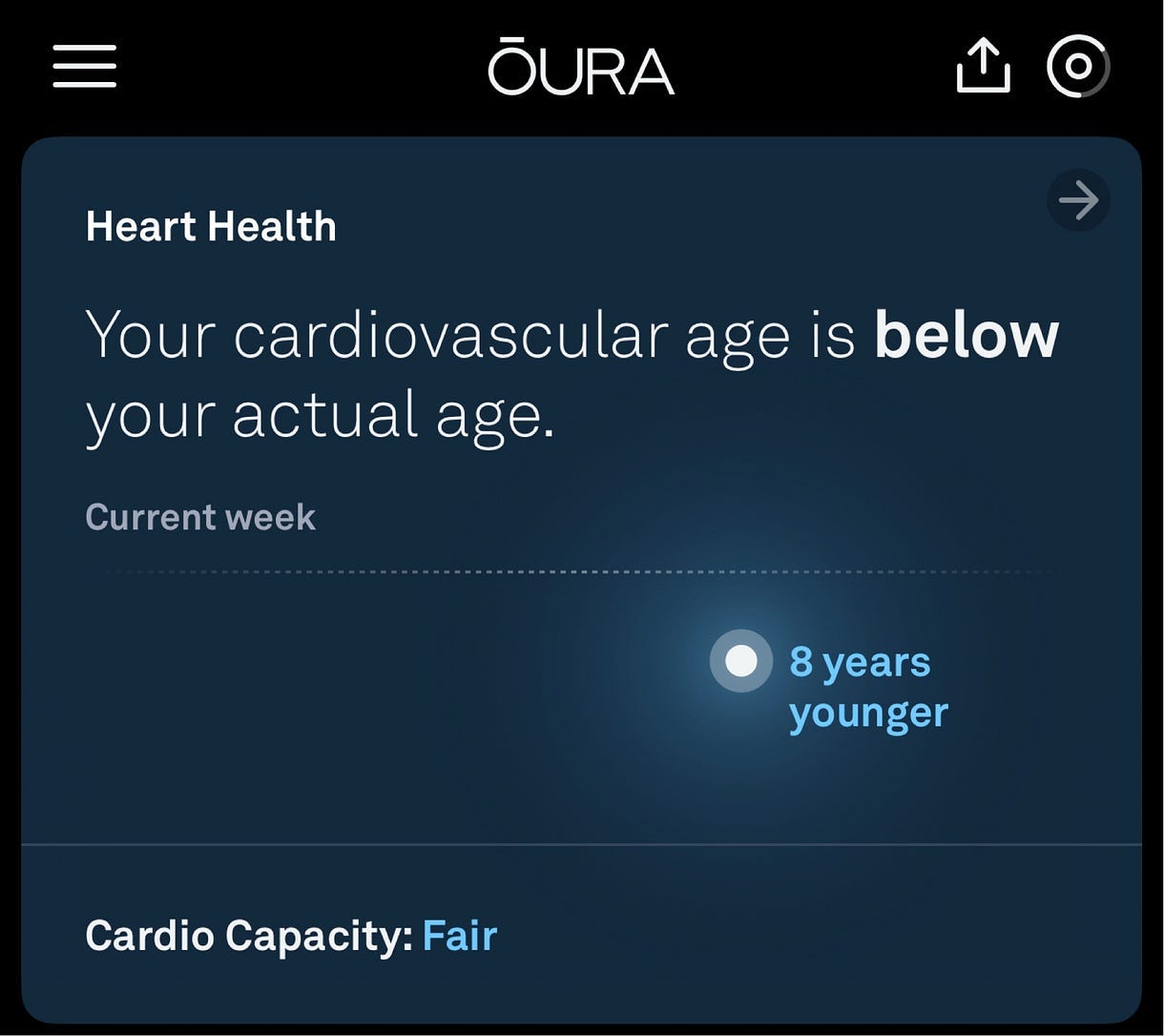
Screenshot from my Oura Ring app. I track my cardiovascular age to ensure my workouts improve my health and not just my appearance.


Longevity matters.

Unlike the peak of his wrestling days, The Rock isn’t trying to push his body to extremes anymore. He has a family, businesses, and a film career to protect.

Slimming down now is a way of investing in his future, making sure he can stay active and productive for decades to come.


His career is evolving.

For years, The Rock has been billed as the oversized action star. A larger-than-life figure who commands the screen with sheer mass.

But at this stage, getting smaller actually opens new doors. With a closer to “normal” frame, he can play roles that he couldn’t at 260 pounds.

So yes, the weight loss is tied to his next film. But in my view, it’s also an intentional health decision that positions him for long-term success both on screen and off.


We’ve Seen This Before

If The Rock’s weight loss looks familiar, that’s because we’ve seen a nearly identical story play out before.

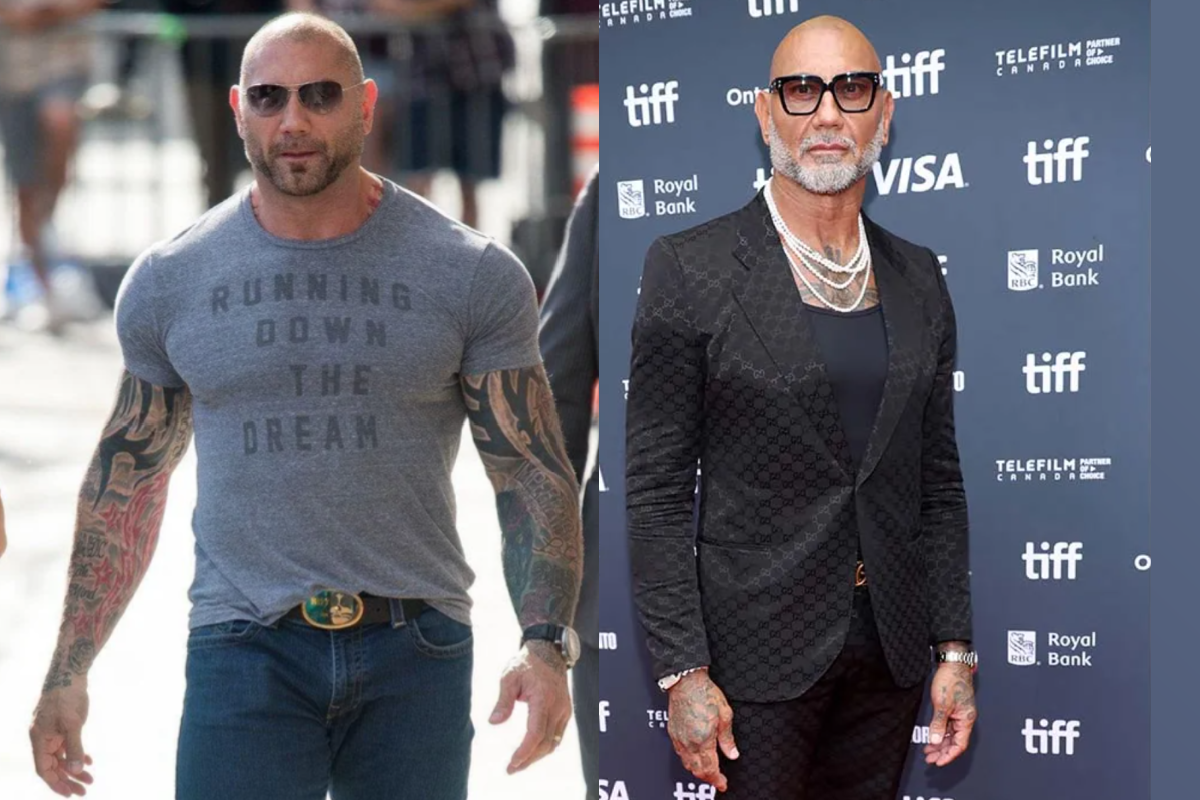
Just two years ago, another former wrestler turned gigantic Hollywood star, Dave Bautista, dropped a reported 75 pounds. Publicly, he explained the change as a combination of cleaner eating, more cardio, and a desire to play more versatile roles.

The media bought it because it was believable. But from a bodybuilder’s perspective, Bautista’s transformation wasn’t a “weight loss journey”. It was an obvious reduction in exogenous hormones.


Image created by author showing Dave Bautista before and after his reported 75-pound weight loss.

At the time, Bautista was also in his 50s. So the more likely explanation was that he transitioned from full bodybuilding-style steroid cycles down to TRT-level maintenance. The broader range of acting opportunities was just an added benefit of slimming down.

Fast forward two years, and Bautista has maintained his smaller stature. To me, that reinforces the idea that the muscle loss wasn’t for a role. It was a side effect of getting off the juice.

The parallels to The Rock are uncanny. Two former wrestlers, both in their 50s, both slimming down dramatically, both citing film opportunities as the public reason.

And in both cases, the underlying driver appears to be the same — cycling off steroids at an age where health risks outweigh the benefits of a muscle-bound physique.


Debunking the Misguided Ozempic Myths

Whenever a celebrity loses a significant amount of weight, the internet rushes to fill in the blanks. In 2025, the default explanation seems to be “Ozempic.”

Press enter or click to view image in full size
Photo by David Trinks on Unsplash


That narrative quickly attached itself to The Rock’s rapid weight loss. Headlines speculated about him secretly using GLP-1 drugs like Ozempic or Mounjaro. These medications are a trending weight loss topic around the world, and several celebrities have admitted to using them. Plus, Ozempic is associated with muscle loss in addition to fat loss.

But let’s take a step back. Do we really believe that The Rock— a lifelong athlete, with decades of experience in nutrition and training, and access to the best coaches and doctors — needs Ozempic to lose weight? Of course not. He already knows how to cut weight effectively through diet and exercise.

However, this transformation isn’t just weight loss. The Rock already had visible abs most of the time. This is a deliberate effort to shed muscle mass.

Therefore, the more likely explanation is that he hopped off the gear. When you stop running supraphysiological doses of steroids and growth hormones, your body sheds size and muscle mass dramatically. That’s what we’re seeing here.

The media latches onto Ozempic because it’s a hot-button drug right now. But in reality, this isn’t about starting a new weight loss drug. It’s about stopping an old muscle gain drug.


Why It Matters

For some of you, this may seem like petty celebrity gossip. Does it really matter that The Rock lost weight or how/why he did it?

Normally, it wouldn’t. But in this case, it matters because the truth about performance-enhancing drugs is hidden.

It’s false advertising.

The “fake natty” influencers of the internet age deliberately deceive the public by lying about their drug use and telling half-truths about how they attained their physiques.

They use their bodies as a billboard that says:

  • “Buy my workout program, and you can be as strong as I am.”
  • “Buy my clothing line so people will know you work as hard as I do.”
  • “Buy my supplements, and you can look jacked like me.”

It’s false advertising, and they know it.

The Rock, in particular, boasts a vast portfolio of brands and partnerships, including a clothing line, energy drinks, men’s grooming products, and even a tequila.


Photo by Anastase Maragos on Unsplash. This gym-goer is sporting a hat and shirt from Under Armour’s Project Rock.

It sets unrealistic expectations.

Enhanced actors, athletes, and fitness personalities intentionally lead fans to believe their physique is attainable through hard work, chicken and broccoli, and whey protein supplements.

When those people fall short, they blame themselves for not having the willpower or discipline, when in reality, they were chasing a lie.
Some give up on their fitness aspirations. Others come to realize that their idol must be taking steroids and covering it up.


It fuels dangerous shortcuts.

Many young men, frustrated by their lack of progress, experiment with PEDs themselves. They think, “I can be like him if I just take steroids.”

Usually, it’s without proper knowledge, medical supervision, or awareness of the long-term risks. In which case, they get the side effects and body image issues without the desired results.

Because the truth is, the top athletes and stars didn’t get where they are by steroids alone. It takes a combination of great genetics, dialed-in diet and training, and experts to help them navigate the complexities of hormones and anabolics.

It ignores the bigger cultural problem.

Steroids are ingrained in fitness, sports, and even the entertainment business. But by sweeping them under the rug, these industries keep people misinformed. It prevents a more constructive conversation about what’s really going on behind the scenes.

For me, this isn’t about exposing anyone. What someone chooses to do with, or put in, their body is their choice. I don’t even blame The Rock for not coming clean — it could be career suicide due to public perception alone.

What I object to is the culture of dishonesty surrounding PED use.

If we can’t be honest about what it really takes to create these physiques, then the public never has a fair shot at understanding what’s possible naturally, what isn’t, and what the risks really are.


Final Thoughts

To be clear, what I’ve shared here is educated speculation. I haven’t seen The Rock’s bloodwork, his prescriptions, or the inside of his medicine cabinet.

What I do have is decades of experience in weightlifting, bodybuilding, and coaching. From that vantage point, the signs point to scaling back steroids and intentional muscle loss, not purely weight loss due to calorie restriction.

It remains to be seen whether Johnson will keep this smaller body for the long term or attempt to build back toward his former size. The latter would be a steep hill to climb at his age, and the risks of chasing that kind of mass only grow with time.


Photo by Erik Mclean on Unsplash

What I hope you take away from this is that steroids and PEDs are not rare outliers in bodybuilding, wrestling, or Hollywood. They’re common. And when the truth is hidden, the public is left idolizing illusions, falling for false advertising, or turning to shortcuts without understanding the risks.

If The Rock has indeed decided to move away from years of heavy PED use, I applaud that. It’s a smart and healthy choice that could extend not only his career but his life.And he will still be in better shape than 99% of people because he has the genetics, dedication, and know-how to do so.

What I want to shed light on is the ongoing delusion—our society’s willingness to ignore the 800-pound roided-out gorilla in the room.

Until we’re honest about performance-enhancing drugs, people will continue to struggle with diet, exercise, and body image issues. More importantly, the real conversation about physical and mental health never gets started.


Transform Your Body in 4 Weeks with These 5 Simple Fitness Moves

Transform Your Body in 4 Weeks with These 5 Simple Fitness Moves


Transform Your Body in 4 Weeks with These 5 Simple Fitness Moves

In this article, we introduce a simple yet effective 4-week fitness challenge designed to help you improve your body without complicated routines or expensive equipment. The best part? You don’t need a gym membership—these exercises can be done easily at home.


To maximize the results, it’s recommended to perform the workout in the morning. Morning exercise helps wake up your muscles, boosts your metabolism, and leaves you feeling energized and focused throughout the day. By staying consistent with this routine, you can gradually build strength, improve flexibility, and notice visible changes in your body within just four weeks.


This challenge is suitable for beginners and anyone looking for a practical way to stay active, fit, and motivated—right from the comfort of home.


  1. Plank

1. Lie down on the floor, face down.

2.Position your arms so that your shoulders are directly over your elbows, with your wrists aligned with your elbows in a straight line (see image above).

3. Contract your abdominal and gluteal muscles (the muscles that make up your buttocks) and hold the position for as long as you can. Gradually lengthen the time you hold the position.

4. Rest for about a minute between reps.


  1. Push-up


1. Start on all fours with your hands on the floor, slightly wider than vertical with your shoulders, but aligned with them.

2. The body should form a straight line from shoulders to ankles.

3. Squeeze your abs to the max and keep them tight.

4. Lower your body until your chest almost touches the floor, making sure your elbows are tucked in close to your torso.

5. Pause and return to the starting position.


3. SQUATS


Ces 5 exercices simples transformeront votre corps en seulement 4 semaines

1. Stand up straight with your feet slightly shoulder width apart and your chest up.

2. Extend your hands in front of you to help maintain your balance.

3. Start by sitting down and then stand up as if you were sitting in an imaginary chair. Keep your face and head facing forward.

4. Lower your body so that your thighs are parallel to the floor. Put all your weight on your heels. Keep your body tight and push your body up through your heels to return to the starting position.


  1. BIRD-DOG IRON
 

1. Start in tabletop position (on all fours).

2. Face down with your neck in a neutral position, extend your right leg behind you and your left arm in front (both should be parallel to the floor).

3. Hold the position for a few seconds and return to the starting position.

4. Do the movement with the opposite leg and arm.


  1. FESSIER BRIDGE
 

1. Lie on your back with your knees bent and your feet flat on the floor.

2. Raise your hips off the floor so that your body forms a straight line from your shoulders to your knees.

3. Pause while in this position, then slowly lower your body to the floor.


Now that you know the 5 exercises, we’re going to introduce you to the 4-week exercise plan. This is an amazing plan that consists of 2 different core workouts.

Workout 1

Plank – 1 minute.
Push-ups – 1 minute.
Squats – 2 minutes.
Bird dog plank – 1 minute.
Glute bridge – 1 minute.
Plank – 1 minute.
Push-ups – 1 minute.
Squats – 2 minutes.
Take 10 second breaks between each.


Workout 2

Plank – 3 minutes.
Bird dog plank – 3 minutes.
Glute bridge – 3 minutes.
Push-ups – 1 minute.
Take 15 second breaks between each.
As you can see, you should have a rest day after 6 days of the training plan.


Week 1

Day 1 – Workout 1.
Day 2 – Workout 2.
Day 3 – Workout 1.
Day 4 – Workout 2.
Day 5 – Practice 1.
Day 6 – Training 2.
Day 7 – Rest.


Second week

Day 1 – Training 2.
Day 2 – Training 1.
Day 3 – Training 2.
Day 4 – Training 1.
Day 5 – Practice 2.
Day 6 – Training 1.
Day 7 – Rest.


Third week

Day 1 – Training 1.
Day 2 – Training 2.
Day 3 – Training 1.
Day 4 – Training 2.
Day 5 – Practice 1.
Day 6 – Training 2.
Day 7 – Rest.


Week 4

Day 1 – Training 2.
Day 2 – Training 1.
Day 3 – Training 2.
Day 4 – Training 1.
Day 5 – Practice 2.
Day 6 – Training 1.
Day 7 – Rest.


Did you find the article on this exercise plan interesting? Please share it!


How to Create a Vision Board for Gym Goals, Motivation, and Consistency

How to Create a Vision Board for Gym Goals, Motivation, and Consistency


How to Create a Vision Board for Gym Goals, Motivation, and Consistency

Walking into the gym, my fitness goals once felt intimidating and hard to manage. In that moment, I reflected on how much a vision board had influenced other areas of my life. That realization inspired me to create a vision board focused specifically on my gym and fitness goals—something that could renew my motivation and bring clarity to my efforts.


In this article, you’ll discover a variety of vision board ideas designed to keep you energized, motivated, and inspired throughout your fitness journey. Whether your goal is weight loss, muscle building, or adopting a healthier lifestyle, a well-designed vision board can serve as a powerful visual reminder. It can help you stay focused, consistent, and committed to achieving long-term gym success.


As I entered the gym, my fitness goals seemed overwhelming. Then, I remembered the impact a vision board had on my life. Creating one for my gym goals could reignite my motivation and sharpen my focus. This article will show you different vision board ideas to keep you motivated and inspired. If you want to lose weight, build muscle, or live healthier, a vision board can help. It can change your fitness journey for the better. Pink aesthetic 2024 body working out pics for photos for, pictures Vision Board Pics Organization, Vision Board For Athletes, Life Vision Board Ideas, Gym Athestic, Working Out Pictures, Black Women Working Out, Gym Flicks, Workout Asethic

Unleash the Power of Vision Boards for Fitness Goals

A vision board is a powerful tool for reaching your fitness goals. It’s a visual display of your dreams and goals. For your gym and health goals, a vision board keeps you motivated and focused.

As I entered the gym, my fitness goals seemed overwhelming. Then, I remembered the impact a vision board had on my life. Creating one for my gym goals could reignite my motivation and sharpen my focus. This article will show you different vision board ideas to keep you motivated and inspired. If you want to lose weight, build muscle, or live healthier, a vision board can help. It can change your fitness journey for the better. Pink aesthetic 2024 body working out pics for photos for, pictures Vision Board Pics Organization, Vision Board For Athletes, Life Vision Board Ideas, Gym Athestic, Working Out Pictures, Black Women Working Out, Gym Flicks, Workout Asethic

What is a Vision Board?

A vision board is a collage of images and affirmations that show what you want. It uses the power of the subconscious mind and the law of attraction. By making a visual board of your fitness goals, you boost positive thoughts and feelings. This can change your actions and behaviors.

As I entered the gym, my fitness goals seemed overwhelming. Then, I remembered the impact a vision board had on my life. Creating one for my gym goals could reignite my motivation and sharpen my focus. This article will show you different vision board ideas to keep you motivated and inspired. If you want to lose weight, build muscle, or live healthier, a vision board can help. It can change your fitness journey for the better. Pink aesthetic 2024 body working out pics for photos for, pictures Vision Board Pics Organization, Vision Board For Athletes, Life Vision Board Ideas, Gym Athestic, Working Out Pictures, Black Women Working Out, Gym Flicks, Workout Asethic

The Science Behind Vision Boards

The science of vision boards is based on mental practices. Visualizing your goals makes your brain act like you’re doing the actions. This visual cue brings positive feelings and personal development. It helps you reach your fitness objectives.

As I entered the gym, my fitness goals seemed overwhelming. Then, I remembered the impact a vision board had on my life. Creating one for my gym goals could reignite my motivation and sharpen my focus. This article will show you different vision board ideas to keep you motivated and inspired. If you want to lose weight, build muscle, or live healthier, a vision board can help. It can change your fitness journey for the better. Pink aesthetic 2024 body working out pics for photos for, pictures Vision Board Pics Organization, Vision Board For Athletes, Life Vision Board Ideas, Gym Athestic, Working Out Pictures, Black Women Working Out, Gym Flicks, Workout Asethic
  • Vision boards use the subconscious mind to draw in what you want.
  • They boost positive thinking and mental practices, affecting your physical actions.
  • Having a visual representation of your fitness goals keeps you motivated and on track.
As I entered the gym, my fitness goals seemed overwhelming. Then, I remembered the impact a vision board had on my life. Creating one for my gym goals could reignite my motivation and sharpen my focus. This article will show you different vision board ideas to keep you motivated and inspired. If you want to lose weight, build muscle, or live healthier, a vision board can help. It can change your fitness journey for the better. Pink aesthetic 2024 body working out pics for photos for, pictures Vision Board Pics Organization, Vision Board For Athletes, Life Vision Board Ideas, Gym Athestic, Working Out Pictures, Black Women Working Out, Gym Flicks, Workout Asethic

A vision board can be a powerful tool for reaching your fitness goals. It helps you stay motivated and focused. Whether you want to lose weight, build muscle, or improve your wellness, a vision board can guide you.

As I entered the gym, my fitness goals seemed overwhelming. Then, I remembered the impact a vision board had on my life. Creating one for my gym goals could reignite my motivation and sharpen my focus. This article will show you different vision board ideas to keep you motivated and inspired. If you want to lose weight, build muscle, or live healthier, a vision board can help. It can change your fitness journey for the better. Pink aesthetic 2024 body working out pics for photos for, pictures Vision Board Pics Organization, Vision Board For Athletes, Life Vision Board Ideas, Gym Athestic, Working Out Pictures, Black Women Working Out, Gym Flicks, Workout Asethic

Begin by thinking about your fitness goals, like cutting down on sugar or eating more healthy foods. Picture where you want to be in your weight loss journey and what steps to take. Collect images and quotes that show your fitness goals and personal aspirations.

As I entered the gym, my fitness goals seemed overwhelming. Then, I remembered the impact a vision board had on my life. Creating one for my gym goals could reignite my motivation and sharpen my focus. This article will show you different vision board ideas to keep you motivated and inspired. If you want to lose weight, build muscle, or live healthier, a vision board can help. It can change your fitness journey for the better. Pink aesthetic 2024 body working out pics for photos for, pictures Vision Board Pics Organization, Vision Board For Athletes, Life Vision Board Ideas, Gym Athestic, Working Out Pictures, Black Women Working Out, Gym Flicks, Workout Asethic

Your vision board can be a physical collage or a digital one made with online tools or apps. The important thing is to have a visual reminder of your fitness goals. This helps you stay focused, identify steps to take, and make healthier choices for your wellness goals.

As I entered the gym, my fitness goals seemed overwhelming. Then, I remembered the impact a vision board had on my life. Creating one for my gym goals could reignite my motivation and sharpen my focus. This article will show you different vision board ideas to keep you motivated and inspired. If you want to lose weight, build muscle, or live healthier, a vision board can help. It can change your fitness journey for the better. Pink aesthetic 2024 body working out pics for photos for, pictures Vision Board Pics Organization, Vision Board For Athletes, Life Vision Board Ideas, Gym Athestic, Working Out Pictures, Black Women Working Out, Gym Flicks, Workout Asethic

Visualizing Your Fitness Journey

When making your fitness vision board, imagine your journey from the beginning to the end. Picture how you’ll feel when you hit your weight loss goals or reach your fitness level. Think about the daily steps you’ll take, like eating healthy foods and going to the gym regularly.

As I entered the gym, my fitness goals seemed overwhelming. Then, I remembered the impact a vision board had on my life. Creating one for my gym goals could reignite my motivation and sharpen my focus. This article will show you different vision board ideas to keep you motivated and inspired. If you want to lose weight, build muscle, or live healthier, a vision board can help. It can change your fitness journey for the better. Pink aesthetic 2024 body working out pics for photos for, pictures Vision Board Pics Organization, Vision Board For Athletes, Life Vision Board Ideas, Gym Athestic, Working Out Pictures, Black Women Working Out, Gym Flicks, Workout Asethic
  • Identify specific fitness goals and desired outcomes.
  • Gather inspiring images, quotes, and other visual cues that represent your wellness goals.
  • Create a physical board or a digital board to visually represent your fitness vision.
  • Refer to your vision board regularly to stay motivated and on track.
As I entered the gym, my fitness goals seemed overwhelming. Then, I remembered the impact a vision board had on my life. Creating one for my gym goals could reignite my motivation and sharpen my focus. This article will show you different vision board ideas to keep you motivated and inspired. If you want to lose weight, build muscle, or live healthier, a vision board can help. It can change your fitness journey for the better. Pink aesthetic 2024 body working out pics for photos for, pictures Vision Board Pics Organization, Vision Board For Athletes, Life Vision Board Ideas, Gym Athestic, Working Out Pictures, Black Women Working Out, Gym Flicks, Workout Asethic

By making a vision board for your gym and fitness goals, you’re setting yourself up for success. It’s a powerful way to visualize your transformation.

As I entered the gym, my fitness goals seemed overwhelming. Then, I remembered the impact a vision board had on my life. Creating one for my gym goals could reignite my motivation and sharpen my focus. This article will show you different vision board ideas to keep you motivated and inspired. If you want to lose weight, build muscle, or live healthier, a vision board can help. It can change your fitness journey for the better. Pink aesthetic 2024 body working out pics for photos for, pictures Vision Board Pics Organization, Vision Board For Athletes, Life Vision Board Ideas, Gym Athestic, Working Out Pictures, Black Women Working Out, Gym Flicks, Workout Asethic

Fuel Your Motivation with Inspirational Quotes

Working towards your fitness goals can be tough. But, using inspirational and motivational quotes can help. These quotes can remind you of your commitment and boost your spirits when you feel down.

Adding inspirational quotes to your vision board can shape your mindset. It helps you stay on track with your fitness journey. Choose quotes that speak to your personal growth and the value of hard work and positive change.

As I entered the gym, my fitness goals seemed overwhelming. Then, I remembered the impact a vision board had on my life. Creating one for my gym goals could reignite my motivation and sharpen my focus. This article will show you different vision board ideas to keep you motivated and inspired. If you want to lose weight, build muscle, or live healthier, a vision board can help. It can change your fitness journey for the better. Pink aesthetic 2024 body working out pics for photos for, pictures Vision Board Pics Organization, Vision Board For Athletes, Life Vision Board Ideas, Gym Athestic, Working Out Pictures, Black Women Working Out, Gym Flicks, Workout Asethic

Here are some motivational quotes to boost your positive feelings and gym success:

  • “The only way to do great work is to love what you do.” – Steve Jobs
  • “Believe you can and you’re halfway there.” – Theodore Roosevelt
  • “It does not matter how slowly you go as long as you do not stop.” – Confucius
  • “Your limit is only your mind.” – Unknown
As I entered the gym, my fitness goals seemed overwhelming. Then, I remembered the impact a vision board had on my life. Creating one for my gym goals could reignite my motivation and sharpen my focus. This article will show you different vision board ideas to keep you motivated and inspired. If you want to lose weight, build muscle, or live healthier, a vision board can help. It can change your fitness journey for the better. Pink aesthetic 2024 body working out pics for photos for, pictures Vision Board Pics Organization, Vision Board For Athletes, Life Vision Board Ideas, Gym Athestic, Working Out Pictures, Black Women Working Out, Gym Flicks, Workout Asethic

Surrounding yourself with these positive thoughts and affirmations can shape your mindset. It supports your vision board and fitness goals. This helps you stay motivated and inspired on your journey.

As I entered the gym, my fitness goals seemed overwhelming. Then, I remembered the impact a vision board had on my life. Creating one for my gym goals could reignite my motivation and sharpen my focus. This article will show you different vision board ideas to keep you motivated and inspired. If you want to lose weight, build muscle, or live healthier, a vision board can help. It can change your fitness journey for the better. Pink aesthetic 2024 body working out pics for photos for, pictures Vision Board Pics Organization, Vision Board For Athletes, Life Vision Board Ideas, Gym Athestic, Working Out Pictures, Black Women Working Out, Gym Flicks, Workout Asethic

Create a Digital Vision Board for On-the-Go Motivation

In today’s digital world, making a virtual vision board is easy and keeps you inspired, even when you’re moving around. There are many apps and online tools for creating a dynamic digital vision board. This makes it simple to stay motivated.

As I entered the gym, my fitness goals seemed overwhelming. Then, I remembered the impact a vision board had on my life. Creating one for my gym goals could reignite my motivation and sharpen my focus. This article will show you different vision board ideas to keep you motivated and inspired. If you want to lose weight, build muscle, or live healthier, a vision board can help. It can change your fitness journey for the better. Pink aesthetic 2024 body working out pics for photos for, pictures Vision Board Pics Organization, Vision Board For Athletes, Life Vision Board Ideas, Gym Athestic, Working Out Pictures, Black Women Working Out, Gym Flicks, Workout Asethic

Apps and Tools for Digital Vision Boards

Check out the many vision board apps and digital vision board tools that help you visualize your goals. You can use apps like Canva, Pinterest, and Microsoft PowerPoint to design your digital vision board. These tools let you pick from images, quotes, and more to make your board.

As I entered the gym, my fitness goals seemed overwhelming. Then, I remembered the impact a vision board had on my life. Creating one for my gym goals could reignite my motivation and sharpen my focus. This article will show you different vision board ideas to keep you motivated and inspired. If you want to lose weight, build muscle, or live healthier, a vision board can help. It can change your fitness journey for the better. Pink aesthetic 2024 body working out pics for photos for, pictures Vision Board Pics Organization, Vision Board For Athletes, Life Vision Board Ideas, Gym Athestic, Working Out Pictures, Black Women Working Out, Gym Flicks, Workout Asethic

Sharing and Updating Your Digital Board

A digital vision board lets you easily change it as your goals change. With just a few clicks, you can update images, add new quotes, or change the layout. You can also share your digital vision board on social media to get support from friends and followers.

As I entered the gym, my fitness goals seemed overwhelming. Then, I remembered the impact a vision board had on my life. Creating one for my gym goals could reignite my motivation and sharpen my focus. This article will show you different vision board ideas to keep you motivated and inspired. If you want to lose weight, build muscle, or live healthier, a vision board can help. It can change your fitness journey for the better. Pink aesthetic 2024 body working out pics for photos for, pictures Vision Board Pics Organization, Vision Board For Athletes, Life Vision Board Ideas, Gym Athestic, Working Out Pictures, Black Women Working Out, Gym Flicks, Workout Asethic

Having your vision board on your smartphone or tablet means you can get motivated anytime, anywhere. Whether you’re on the bus, in line, or just need a quick boost, your digital vision board is there. Its visual format is a great way to stay focused and motivated in your fitness journey.

As I entered the gym, my fitness goals seemed overwhelming. Then, I remembered the impact a vision board had on my life. Creating one for my gym goals could reignite my motivation and sharpen my focus. This article will show you different vision board ideas to keep you motivated and inspired. If you want to lose weight, build muscle, or live healthier, a vision board can help. It can change your fitness journey for the better. Pink aesthetic 2024 body working out pics for photos for, pictures Vision Board Pics Organization, Vision Board For Athletes, Life Vision Board Ideas, Gym Athestic, Working Out Pictures, Black Women Working Out, Gym Flicks, Workout Asethic

Incorporate Visuals for a Powerful Impact

The visuals on your vision board are key to its success. Choosing the right images, photos, and symbols boosts their impact and inspiration. Include pictures of healthy foods, workout gear, and your dream body or weight. These visuals should match your fitness goals.

As I entered the gym, my fitness goals seemed overwhelming. Then, I remembered the impact a vision board had on my life. Creating one for my gym goals could reignite my motivation and sharpen my focus. This article will show you different vision board ideas to keep you motivated and inspired. If you want to lose weight, build muscle, or live healthier, a vision board can help. It can change your fitness journey for the better. Pink aesthetic 2024 body working out pics for photos for, pictures Vision Board Pics Organization, Vision Board For Athletes, Life Vision Board Ideas, Gym Athestic, Working Out Pictures, Black Women Working Out, Gym Flicks, Workout Asethic

Finding the Right Images and Symbols

For your vision board, gather a mix of visual images that show your fitness journey. Use personal photos of you in action or inspirational words that match your goals. The more visual cues you add, the clearer your vision board will be.

As I entered the gym, my fitness goals seemed overwhelming. Then, I remembered the impact a vision board had on my life. Creating one for my gym goals could reignite my motivation and sharpen my focus. This article will show you different vision board ideas to keep you motivated and inspired. If you want to lose weight, build muscle, or live healthier, a vision board can help. It can change your fitness journey for the better. Pink aesthetic 2024 body working out pics for photos for, pictures Vision Board Pics Organization, Vision Board For Athletes, Life Vision Board Ideas, Gym Athestic, Working Out Pictures, Black Women Working Out, Gym Flicks, Workout Asethic
  • Look for personal photos that show your fitness progress and achievements.
  • Add images of healthy foods that fit your diet goals.
  • Put symbolic visuals on your board that show your goal weight or body shape.
  • Use inspirational words or affirmations to support your specific goals.
As I entered the gym, my fitness goals seemed overwhelming. Then, I remembered the impact a vision board had on my life. Creating one for my gym goals could reignite my motivation and sharpen my focus. This article will show you different vision board ideas to keep you motivated and inspired. If you want to lose weight, build muscle, or live healthier, a vision board can help. It can change your fitness journey for the better. Pink aesthetic 2024 body working out pics for photos for, pictures Vision Board Pics Organization, Vision Board For Athletes, Life Vision Board Ideas, Gym Athestic, Working Out Pictures, Black Women Working Out, Gym Flicks, Workout Asethic

The more personal and meaningful your vision board looks, the bigger impact it will have. It will motivate your subconscious mind and help you reach your fitness goals.

As I entered the gym, my fitness goals seemed overwhelming. Then, I remembered the impact a vision board had on my life. Creating one for my gym goals could reignite my motivation and sharpen my focus. This article will show you different vision board ideas to keep you motivated and inspired. If you want to lose weight, build muscle, or live healthier, a vision board can help. It can change your fitness journey for the better. Pink aesthetic 2024 body working out pics for photos for, pictures Vision Board Pics Organization, Vision Board For Athletes, Life Vision Board Ideas, Gym Athestic, Working Out Pictures, Black Women Working Out, Gym Flicks, Workout Asethic

Vision Board Party: A Fun Way to Stay Motivated

Hosting a vision board party is a fun way to stay motivated in fitness. Invite your friends, family, or fitness buddies for a day of crafting your vision boards. It’s a great way to share goals, brainstorm, and inspire each other.

Offer a variety of materials like magazines, scissors, glue sticks, and templates. Let everyone get creative with their vision boards. You can use poster board, cork board, or magnetic board. This activity makes starting your fitness journey fun and keeps it in mind.

Use social media to share your vision boards and experiences online. This helps build a community and keeps you accountable. You’ll inspire others and stay motivated too.


5 Myths about Fitness That Lazy People Support

5 Myths about Fitness That Lazy People Support

5 Myths about Fitness That Lazy People Support


Fitness is often surrounded by myths and misconceptions, many of which are embraced by those looking for excuses to avoid physical activity. These myths can hinder progress and prevent people from reaching their health and fitness goals. Here are five common fitness myths that lazy people often support:


Myth 1: Sport is Only For Professionals.

This idea applies only in the case of performance sports. The native qualities required for professional sportsmen (speed, skills, specific height, etc.) can only be developed, they can't be formed by training.

As long as the aim of a regular person is not performance, almost all sports can be practiced for keeping the body in a good shape. It's all about dosing the training you chose, so that the benefits are bigger than wear and tear. Even the sports considered tough can be practiced in a 'soft' way (tae-bo, mini-triathlon, jogging, etc.).


Myth  2: Training is Tiring

This idea is true as long as it refers to consuming all your energy (muscular and hepatic glycogen), but it doesn't mean that training gets you into that state of exhaustion which would slow down the process of recovery of the body. Even in performance sports, the purpose is to have rather effective than exhausting training, so that the body can get the stimulation necessary to qualitative progress from one training to the next.

Even more than in other sports, in fitness the sportsman is spared overexerting. However, the training must not become ineffective. People can come to the gym tired after a work day and leave relaxed (physically and psychologically) and not more tired. This is extremely useful for people with sedentary jobs, but also for those who make physical effort at work. They could use the training by choosing a type of effort meant to compensate the one involved in their job.


Myth 3: Training Takes Too Long

Again, this idea is true if applied to performance, which can only be obtained by working a lot. But also in this case short and very intense training or training for relaxation and recovery are often performed. In fitness, you can get to 20-minute training, working only super-series of fast exercises, which could involve, directly or indirectly, all the muscles.

Anyway, regular training shouldn't take longer than an hour and a half. Otherwise, the body will get into the catabolic faze, when the cortisone secretions 'cannibalize' the muscles.


Myth 4: Any Type of Exercise is Good For Solving Your Problems

What's true in this refers to some particular cases like excess of adipose tissue. This tissue can be 'melted' by any kind of aerobic exercise (running, cycling, swimming) if this is continued long enough. Even in these cases it was clear that some exercises are more effective than others. There are situations when only a combination of exercises with a certain amount of each, can provide you with the results you expect.

More than that, repeating the same exercise all the time can have as a consequence not only losing balance in the antagonist muscles and in the joints involved in training, but also stopping progress or even regressing.


Myth 5: You're Too Old For Exercise

This is true only if we refer to extremely demanding efforts (really heavy weights, fast running, jumping, etc.). There are lots of exercises adapted to different ages. Their purpose is to keep and improve health and also to improve physical shape. The development of movement parameters for older people refers especially to muscular and cardio-vascular resistance as well as mobility of the joints.

Because the final purpose of training is not preparing for a competition, the exercises can be organized gradually according to their difficulty, eliminating the risk of accidents. Because it's based on perseverance, fitness can be adapted without problems for older people and even for people suffering from different affections specific to old age.


Get Perfect Abs – The 15-Minute Standing Workout for Flat Abs (Video)

Get Perfect Abs – The 15-Minute Standing Workout for Flat Abs (Video)

Get Perfect Abs – The 15-Minute Standing Workout for Flat Abs (Video)


This 15 minute fitness program entirely engages your upper body, without using the standard abdominal exercises.

“FitnessBlender”, one of the most popular fitness channels, presents the program which allows you to burn 102 calories in only 15 minutes, and promises a much more interesting way of strengthening the abdominal muscles than the standard one.

The advantages of this program are numerous, and for starters, the easy part is that you don’t need any special equipment, which means no weight sets, or gym mats for abs exercises. Prepare your trainers, shorts and T-shirt, and you’re ready.

It’s important to do each exercise for 50 seconds, and then rest for 10 more.

Take a look at these seven exercises, which promise you’ll get great abs.


7 Simple Yoga Stretches to Soothe Sciatica Back Pain (From Costa Rica!)

7 Simple Yoga Stretches to Soothe Sciatica Back Pain (From Costa Rica!)

7 Simple Yoga Stretches to Soothe Sciatica Back Pain (From Costa Rica!)


Sciatica is the tenderness and pain that affect the sciatic nerve, which is the longest nerve in the body, stretching from the lower spine, down the left and right buttocks, to the back of the legs, at about the middle of the thighs, and ends at the feet.

The sciatic nerves, one of each leg, originate from several nerve roots that exit from the spinal cord, then thread through the sacrum and merge to form the main body of the sciatic nerve.

This nerve goes between layers of the deep buttock muscles (gluteus medius and gluteus maximus), via the deep muscles of the back of the thigh, and goes down to the outer edge of the leg to the foot.

The most common symptoms of this condition include:

  • Pain anywhere along the sciatic nerve pathway
  • A weakness that causes the knees to buckle when standing up
  • Fatigue, numbness, or loss of feeling in the feet or legs
  • Reduced reflexes in the knee or Achilles tendons
  • A feeling of tingling, burning, pinching, or pins-and-needles, or paresthesia
  • Foot drop

In order to treat sciatica and its accompanying symptoms, you need to discover the root cause of your problem, as no one’s body or symptoms are exactly the same.


These are the most common causes of sciatica:

  • Lumbar herniated disc
  • Piriformis syndrome: A tight Piriformis muscle pinches a nerve root of the sciatic nerve
  • Degenerative disc disease- A weakened disc causes an excessive micro-motion at that spinal level and inflammatory proteins from inside the disc and irritates the area
  • Scar tissue that compresses the nerve root
  • Lumbar spinal stenosis
  • Pregnancy, due to the hormonal changes and weight gain
  • Muscle strains
  • Sacroiliac joint dysfunction
  • Isthmic spondylolisthesis: This condition occurs when a vertebral body slips forward on the one below it due to a small fracture in a piece of bone that connects the two joints on the back side of the spinal segment.
  • A spinal tumor which can pinch the nerve root


According to Dr.Joseph Mercola:

“If you have back pain or sciatic nerve pain, you’re not alone. Globally, one out of 10 people suffers from lower back pain, and back pain is also the number one cause of job disability worldwide.

The problem appears to be particularly prevalent in the US. According to estimates, as many as eight out of 10 Americans struggle with back pain, and this affliction has now become a primary cause of pain killer addiction.”


Dr. Josh Axe, DC, DMN, CNS adds:

“While many people turn to pain-reducing medications or even surgery to correct the problem, studies have actually found that less invasive treatment options — like chiropractic spinal adjustments — can be just as effective for healing sciatic nerve pain.

Acupuncture, yoga, and massage therapy are other alternative treatment approaches that been have proven to help act like natural muscle relaxers and kick this type of debilitating pain for good.

The best part about trying these natural sciatica treatments? They come with a very little risk of negative side effects, don’t harm nerve anatomy, along with numerous other perks like reduced stress levels, better range of motion, protection from injuries and even better immunity.”


Hamstring stretches and hip openers can be of vital importance in the treatment of sciatica pain.  Therefore, the following simple yoga stretches will help you relieve this condition in a short period of time:


1) Smiling Cow Face Variation

2) Half Lord of the Fishes Pose

3) Sleeping Pigeon Pose

4) Reclined Twist

5) Supported Bridge Pose

6) Open Lizard Pose

7) Bound Angle Pose